Formula 1 articles
Rules, tech, history and records – explained simply, with data from our database going back to 1950.
Beginners
BeginnersHow many races are in an F1 season: races per year and the calendarRecent F1 seasons have had 22 to 24 rounds: 22 a year in 2021–2023 and 24 in both 2024 and 2025. Twenty-four is the record and the limit in the FIA regulations. The 2026 calendar started with 24 rounds; as of 29 September it has 23, as the Saudi Arabian Grand Prix did not take place. In 1950 there were seven races.BeginnersDifference between F1 and F2: cars, power, rules and lap timesIn Formula 1 each team designs the key parts of its own car, and the hybrid power unit makes about 1,020 hp by our conversion. In Formula 2 everyone drives the same Dallara with a 620 hp engine and no electric motor — the last step before F1. At the six permanent circuits of 2026, F2 poles were 9.4–11.9 s slower. BeginnersHow long is an F1 race? Race time, laps and recordsAn F1 race usually lasts about an hour and a half: in 2025 the winners took 1 h 13 min to 1 h 42 min. The distance is just over 305 km (260 km in Monaco), or 44 to 78 laps in 2026. At the two-hour limit the leader finishes the lap in progress plus one more; a red-flag stoppage extends the limit to three hours at most.
 BeginnersWhy is it called Formula 1? What the “formula” and the 1 meanThe “formula” is the set of technical rules that every car has to comply with, and the number 1 marks the top class. The main formula was approved in 1946 and got its number when Formula II appeared in 1948; the first World Championship was held in 1950.
 BeginnersF1 rules explained: a simple guide for beginnersFormula 1 is a world championship of Grands Prix. Each event lasts three days: practice, qualifying and the race. The top ten in a race score points; season totals decide the champion and the best team. Tyres are changed at pit stops, flags and the safety car control the race, and the stewards punish rule breaches.
Rules
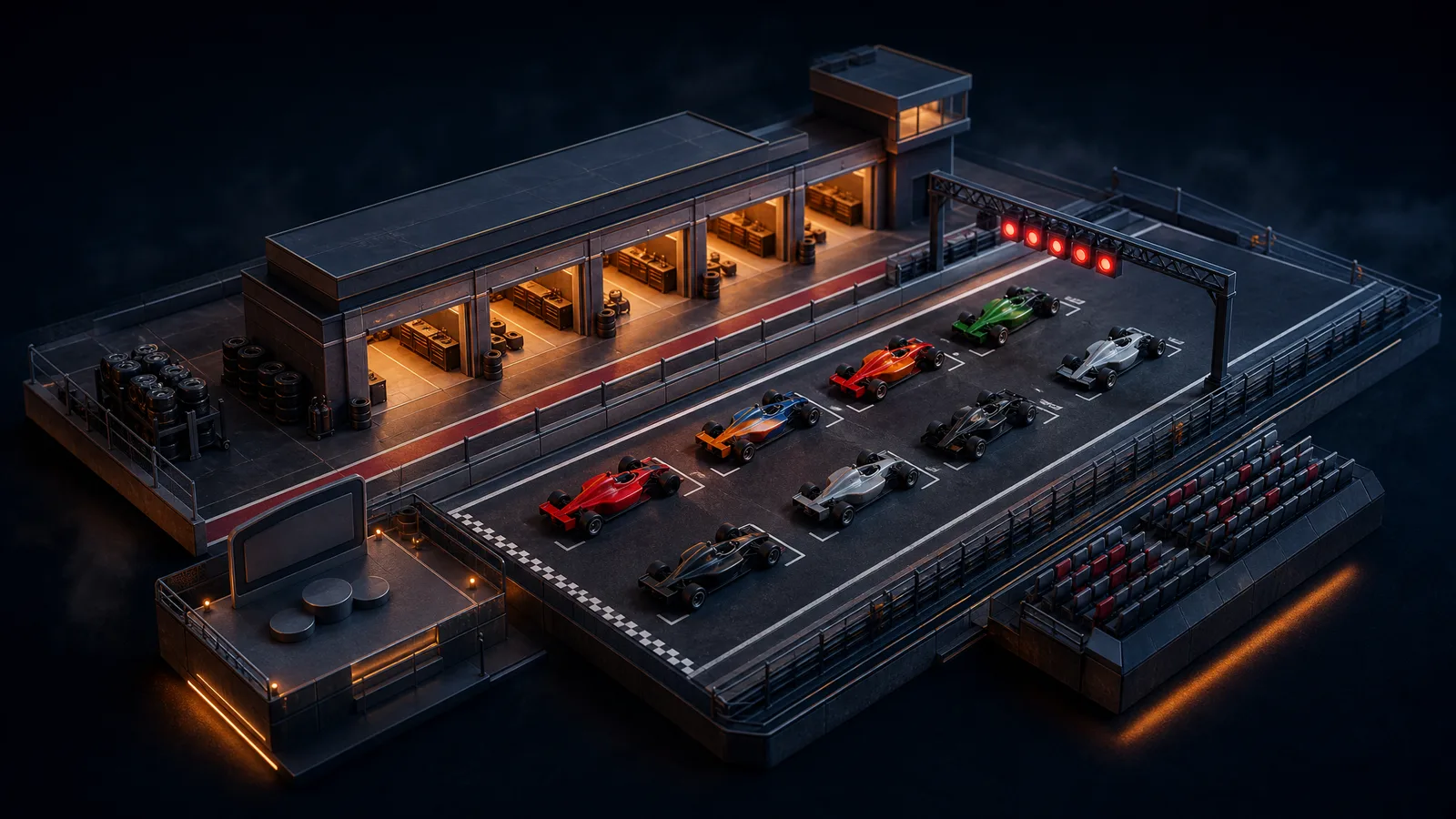
RulesF1 Super Licence: what it is, the types and how drivers get oneThe Super Licence is the FIA licence you need to start an F1 race. Racing needs the full one: under the 2026 rules, usually age 18, 40 points over three years and two seasons in single-seaters. Friday practice has a lighter Free Practice Only version. The FIA also issues Super Licences to teams and event officials.RulesHow does an F1 race start? From the grid procedure to the five red lightsAn F1 race begins with a standing start. After the formation lap the cars stop in their grid slots with engines running; five red lights come on one per second and go out together, and that is the start. Since 2026 blue panels flash for five seconds before the lights. Move too early and you get a jump start penalty.RulesF1 safety car rules: when it comes out and how the VSC differsThe safety car is sent out by the Race Director when the track is dangerous but the race doesn’t need to be stopped. Drivers follow it in a queue, no more than 10 car lengths apart, and don’t overtake. The Virtual Safety Car (VSC) slows everyone down without a car: each section of track must take at least a set time.RulesF1 penalties explained: types, offences, penalty points and who decidesPenalties in Formula 1 are handed out by the stewards, the judges at each event. In the race they are 5 or 10 seconds, a drive-through or a 10-second stop-and-go; in qualifying, a deleted lap or grid places. A driver can also get penalty points: 12 within 12 months and they miss the next event.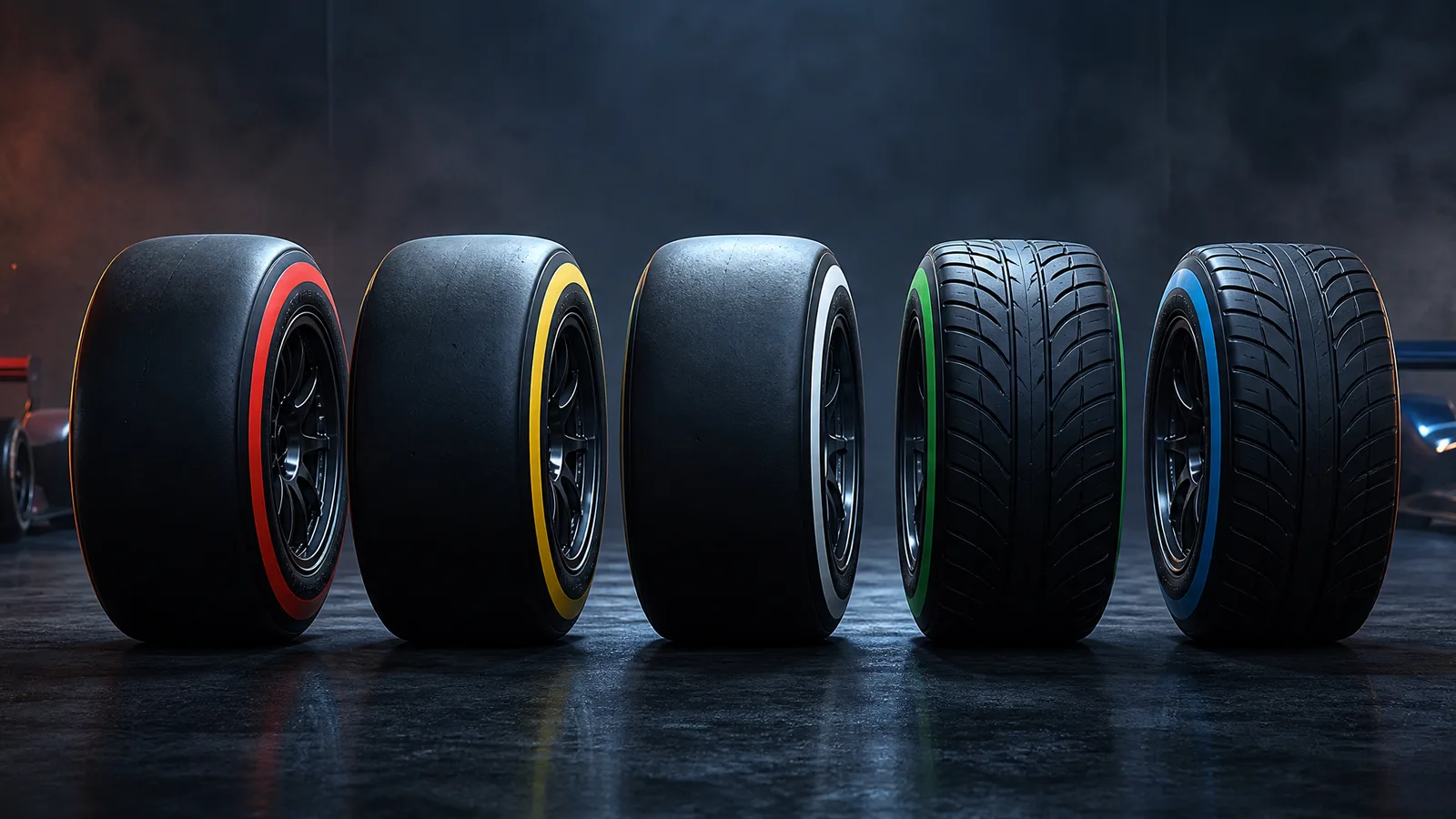 RulesF1 tyres explained: compounds, colours and the 2026 rulesIn 2026 every team uses tyres from a single supplier, Pirelli. There are five dry compounds, from the hard C1 to the soft C5; three go to each event, marked with a coloured band: white for hard, yellow for medium, red for soft. On a wet track drivers use intermediates, marked green, and full wets, marked blue.RulesF1 sprint format explained: the sprint race, Sprint Qualifying and pointsA sprint is a short race of just over 100 km, about a third of the usual distance, held on the second day of a sprint weekend. Its grid is set by Sprint Qualifying, there is no mandatory pit stop, and the top eight score points, from 8 down to 1. There are six sprints in 2026 and ten on the 2027 calendar.
 RulesPole position in F1: what it means, records, hat-tricks and the Grand SlamPole position, or simply pole, is first place on the starting grid for the race. It goes to the driver with the best lap in qualifying, unless a penalty moves them back. The term comes from horse racing. Pole, the win and the fastest lap in one race make a hat-trick; lead every lap as well, and it’s a Grand Slam.
 RulesF1 pit stops: how teams change four tyres in two secondsA pit stop is when a car stops in the pit lane for new tyres. Mechanics lift the car and change all four wheels in about two seconds; the record is 1.80 s, set by McLaren in 2023. With the drive down the pit lane, the whole visit usually takes 18–31 s, depending on the circuit. Races have had no refuelling since 2010.
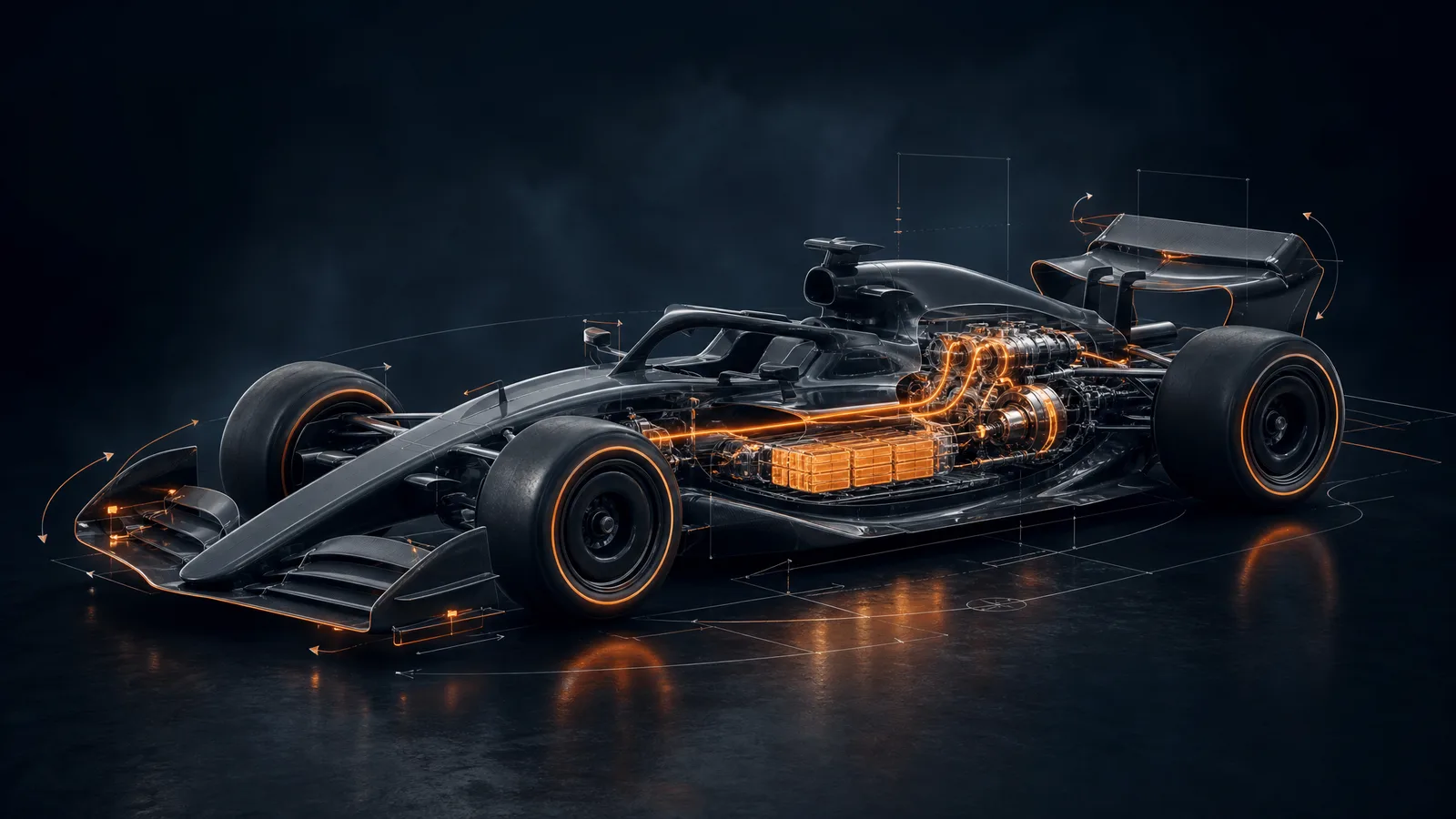 RulesF1 2026 regulations explained: what changed in the rulesFrom 2026 almost half the power comes from the electric motor — up to 350 kW — and the MGU-H is gone. The cars are smaller and about 30 kg lighter, moving wings with Straight Mode have replaced DRS, and Overtake Mode helps drivers attack. There are eleven teams: Cadillac have joined, and Sauber now race as Audi.
 RulesHow does F1 qualifying work? Q1, Q2, Q3 and the 107% ruleQualifying decides where everyone starts. It lasts an hour and comes in three parts. All 22 drivers go out in Q1, the six slowest are knocked out after Q1 and again after Q2, and the top ten fight for pole in Q3. From 1950 to 2025, 43% of races were won from pole.
 RulesHow do F1 points work? Race, sprint and points historyIn 2026 the top ten in a race score points: 25, 18, 15, 12, 10, 8, 6, 4, 2 and 1. In a sprint the top eight score, from 8 down to 1. There has been no point for the fastest lap since 2025. A driver’s points go to the Drivers’ Championship, and both drivers’ points go to their team in the Constructors’ Championship.
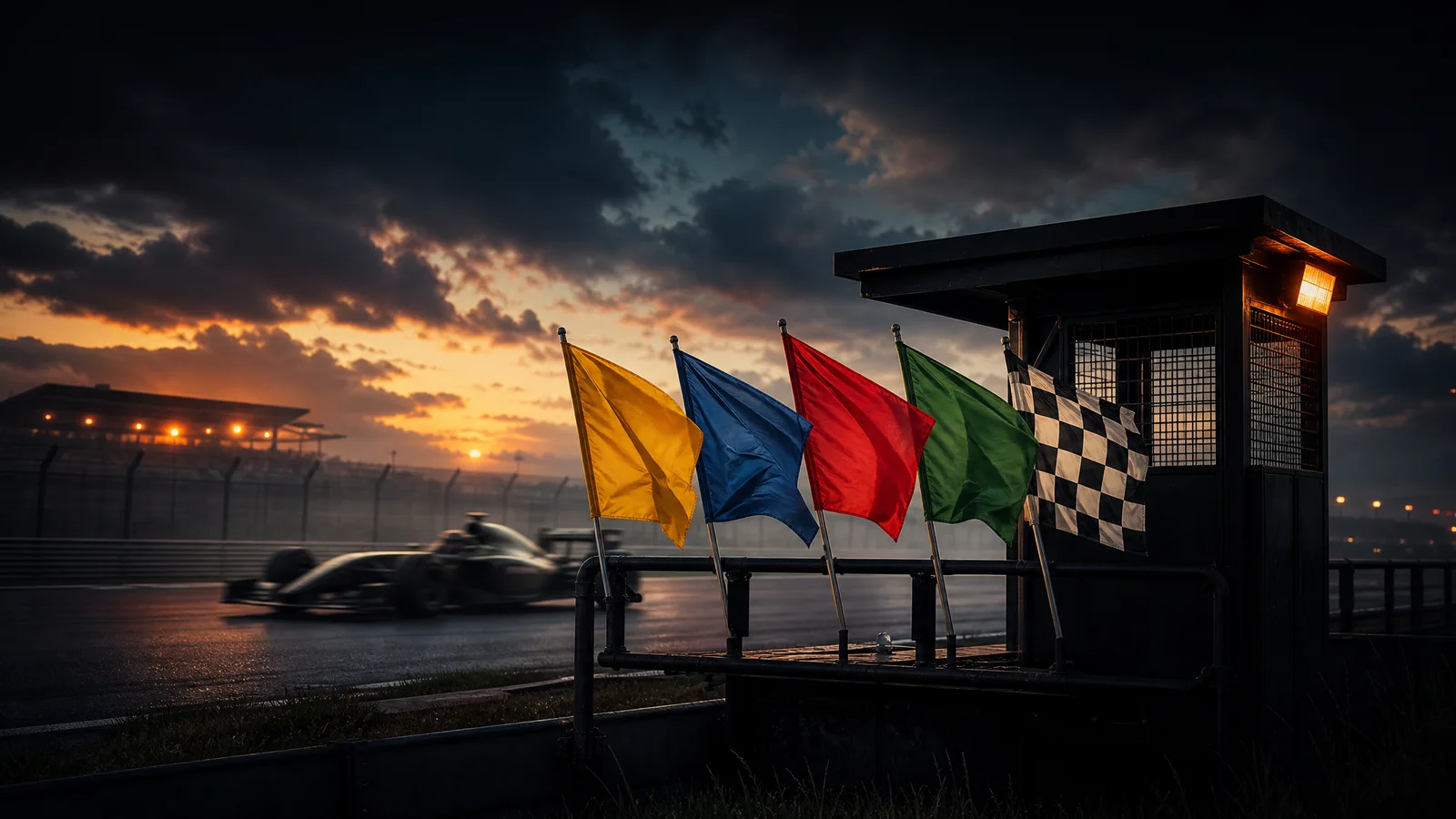 RulesF1 flags explained: what each flag meansFlags are the marshals’ language. Yellow means danger: slow down and don’t overtake. Blue: let the car about to lap you go past. Red: the session has been stopped. Chequered: the finish. There are eleven signals in all, the light panels by the track mean the same, and the stewards penalise drivers who ignore them.
Tech
TechF1 telemetry: what it is and how to read itTelemetry is data from the car’s sensors that is sent to the pits during a session: speed, revs, gear, throttle, brake, temperatures and pressures. According to Formula 1 figures from 2020, a car has more than 300 sensors. Teams may not send data back to the car, and the FIA sees the telemetry in real time.TechWhy do F1 cars spark? The plank under the floor and titanium skidsThe sparks come from metal skids in the plank under the floor when the car scrapes the track. The plank arrived in 1994 to stop cars running too low. Since 2015 the skids have been titanium alloy: lighter than the old metal, it wears faster and, as the FIA warned, sparks more. From 2026 the FIA can also choose steel.TechF1 halo: what the bar over the cockpit is for and the crashes it helped inThe halo is a safety bar over the cockpit: a three-pronged titanium alloy frame that shields the driver’s head. Compulsory in F1 since 2018, it weighs about 7 kg under the FIA standard and withstands 125 kN in testing. The FIA and Formula 1 link it to the outcome of the crashes of Leclerc, Grosjean, Hamilton and Zhou.TechG-force in F1: how many g do drivers experience?According to Mercedes and Formula 1, a driver pulls over 5 g in the fastest corners and under braking — a force more than five times their body weight. In 2017 Formula 1 recorded up to 6.5 g for Lewis Hamilton in a corner at Albert Park. In Romain Grosjean’s 2020 crash in Bahrain it was 67 g, according to the FIA.TechHow much horsepower does an F1 car have? The 2026 engine explainedThe 2026 F1 engine is a power unit: a 1.6-litre turbocharged V6 plus the MGU-K electric motor and a battery. The FIA estimates the combustion engine at about 400 kW, and the electric motor gives up to 350 kW: together about 1,020 metric horsepower, by our conversion. Five manufacturers build them.TechF1 2026 cars: size, weight, aerodynamics and safetyThe 2026 F1 car is shorter and narrower than before: a wheelbase of up to 3,400 mm and a width of 1,900 mm. It weighs at least 724 kg with the driver, without tyres or fuel. Both wings move, it has eight gears and only the rear wheels are driven. Each team builds its own car: McLaren MCL40, Ferrari SF-26 and others.TechDRS in F1: what it was, how it worked and why it was scrapped in 2026DRS was a moving flap on the rear wing: on a straight the driver opened it, drag dropped and the car accelerated faster. In a race it was only available to a driver less than a second behind a rival. DRS lasted 15 seasons, from 2011 to 2025, and in 2026 it was replaced by Straight Mode and Overtake Mode.TechHow much does an F1 car cost? There’s no official price, but there is a cost capThere is no official price for an F1 car — not in the FIA regulations, from Formula 1 or from the teams. The FIA caps a team’s spending, not the price of the car: in 2026, $215 million for a season of up to 24 rounds. A customer team pays at most €22 million a season for engines. Other figures are team estimates. TechHow fast is an F1 car? Top speed, records and speeds in 2026The FIA clocked Valtteri Bottas at 372.5 km/h (231 mph) at the 2016 Mexican Grand Prix; Williams call it the highest official speed in a race. At the first 15 events of 2026 the best was 358.2 km/h: the electric motor fades above 290 km/h. Average race speeds in 2025 ran from 155 km/h in Monaco to 251 km/h at Monza.
History
HistoryRussian Grand Prix in F1: every race in Sochi, the winners and the trackThe Russian Grand Prix was part of the F1 World Championship eight times, from 2014 to 2021, all at the Sochi Autodrom. All eight were won by Mercedes drivers: Lewis Hamilton five times, Valtteri Bottas twice and Nico Rosberg once. On 3 March 2022 Formula 1 terminated its contract with the race promoter.HistoryOldest F1 team: Ferrari, and how old every team on the 2026 grid isThe oldest Formula 1 team is Ferrari: they have raced in the World Championship since 1950 without missing a season, and 2026 is their 77th. McLaren are second, racing since 1966, and Mercedes third: by the team lineage, they began as Tyrrell in 1970.HistoryNiki Lauda’s crash at the Nürburgring in 1976 and his title fight with James HuntOn 1 August 1976, at the German Grand Prix, Niki Lauda crashed on the Nürburgring’s Nordschleife. On the second lap his Ferrari left the track and caught fire, and other drivers pulled him out of the car. Lauda missed two races, finished fourth at Monza 42 days later and lost the title to James Hunt by one point.HistoryF1 Constructors’ Champions list: every winner by year since 1958From 1958 to 2025 the Formula 1 Constructors’ Championship was contested 68 times and won by 15 different teams. Ferrari have the most titles with 16, McLaren have 10 and Williams 9. The 2025 Constructors’ Champions are McLaren, who won it for the second year running.HistoryBest F1 races of all time: Formula 1’s list, the fans’ picks and the recordsThere is no single list of the best races, but the Formula 1 website has a list and fan votes. In 2025 its editors named the 2011 Canadian Grand Prix the greatest race in 75 years, and in 2020 fans voted the 2019 German Grand Prix the best race of the 2010s. The closest finish in f1db is Monza 1971: 0.01 s.HistoryAbu Dhabi 2021 in F1: what happened at the finale, the protests and the FIA decisionsOn 12 December 2021 Max Verstappen and Lewis Hamilton went into the finale level on 369.5 points. The safety car was called in before the last lap, on which Verstappen overtook Hamilton to become champion. The stewards dismissed both Mercedes protests, and in March 2022 the FIA confirmed that the results are final.HistoryAyrton Senna’s death: Imola 1994, Roland Ratzenberger and what changed afterAyrton Senna died on 1 May 1994 at the San Marino Grand Prix at Imola: he was leading when his Williams went off at Tamburello and hit a concrete wall. The day before, Austria’s Roland Ratzenberger died in qualifying. An Italian court found that a steering column failure caused Senna’s accident; no one was convicted.HistoryThe first F1 race and the first world champion: how the championship beganThe first race of the Formula 1 World Championship was held at Silverstone on 13 May 1950: it was the British Grand Prix. Nino Farina won, and Alfa Romeo cars took the top three places. Farina also became the first world champion: the season had seven races, and the title was decided at the last of them, at Monza. HistoryF1 champions by year: every world champion since 1950From 1950 to 2025 the Formula 1 World Championship was contested 76 times, and 35 drivers became world champion. Michael Schumacher and Lewis Hamilton have the most titles, seven each. The 2025 champion is Lando Norris with McLaren.
Records
RecordsMost F1 championships: which driver has won the most world titlesAs of the end of 2025, Michael Schumacher and Lewis Hamilton have the most Formula 1 world titles, seven each. Juan Manuel Fangio has five, and Alain Prost, Sebastian Vettel and Max Verstappen four each. The most successful team is Ferrari: 16 Constructors’ titles since 1958 and 15 titles for their drivers.RecordsBest F1 drivers of all time: titles, wins, poles and win ratesThere is no single measure of “best”, but every count has a leader. As of the end of 2025, Lewis Hamilton and Michael Schumacher have the most titles, seven each, and Hamilton the most wins and poles: 105 and 104. Juan Manuel Fangio won most often: 47.1% of his starts, among drivers with 50 or more.RecordsF1 lap record: the fastest lap in F1 history and every circuit’s recordA circuit’s lap record is the best race lap on its current layout; qualifying doesn’t count. The fastest race lap in history by average speed is 1:20.901, 257.8 km/h: Lando Norris, Monza, 2025. Max Verstappen’s qualifying lap there was faster still — 1:18.792, 264.7 km/h.RecordsThe youngest and oldest F1 drivers: every age record in Formula 1The youngest driver in Formula 1 history is Max Verstappen: he started the 2015 Australian Grand Prix aged 17 years and 166 days. The youngest world champion is Sebastian Vettel, at 23 years and 134 days in 2010. The oldest driver to start a race is Louis Chiron: he was 55 years and 292 days old in 1955.
Circuits
CircuitsF1 street circuits: the 2026 list and their historyIn 2026, eight of the 23 rounds are held on street circuits: in Melbourne, Miami, Montreal, Monaco, Madrid, Baku, Singapore and Las Vegas. They are laid out on streets and roads, and some are put together only for the race weekend. The championship has had 20 of them; the oldest, Monaco, has been in it since 1950.CircuitsNordschleife: what the track is and why F1 left it after 1976The Nordschleife is the North Loop of the Nürburgring in the Eifel mountains, opened in 1927: according to the circuit, 20.832 km, 73 corners and 300 m of elevation change. Formula 1 held 22 German Grands Prix there in 1951–1976, and in 1977 drivers’ representatives decided to hold no more top-flight races there.CircuitsF1 night races: which Grands Prix are held after sunsetIn 2026, three of the 23 races start after sunset: the Singapore, Las Vegas and Qatar Grands Prix. One more, in Abu Dhabi, starts half an hour before sunset and finishes in the dark, under floodlights. In 2024 and 2025 there were six such races a year: Bahrain and Saudi Arabia were also run in the dark.CircuitsThe longest, shortest and fastest F1 trackOn the 2026 calendar the longest track is Spa-Francorchamps, at 7.004 km, and the shortest is Monaco, at 3.337 km. The fastest is Monza: the fastest lap of its 2026 race averaged 249.7 km/h (155 mph). The longest track ever was Pescara — 25.579 km, in 1957.CircuitsHardest F1 track: what Formula 1 itself says and what the numbers showWe found no official ranking of track difficulty. In October 2025 the Formula 1 website called the Singapore Grand Prix “the toughest race on the calendar”: heat, humidity and 19 low-speed corners. By f1db, Madring has the most corners in 2026, 22, and in 2014–2025 Melbourne had the most retirements, 22.8% of starters.
Drivers and teams
Drivers and teamsF1 driver numbers: how they are chosen and why there is no number 17Since 2014 every Formula 1 driver has raced with a permanent number, choosing it themselves from 2 to 99. Number 1 can be taken by the reigning world champion: in 2026 that is Lando Norris. The FIA retired number 17 in 2015 in memory of Jules Bianchi.Drivers and teamsWomen in F1: who started races, and who drove in practice and testsFive women have entered Formula 1 World Championship races, and two started: Maria Teresa de Filippis in 1958 and Lella Lombardi in 1975–1976. Lombardi is the only one to have scored points: half a point in 1975. There are no women among the drivers of the 2026 season, and the FIA rules are the same for everyone. Drivers and teamsRussian F1 drivers: every Russian in Formula 1, with starts, teams and podiumsFour Russians have started races in the Formula 1 World Championship: Vitaly Petrov, Daniil Kvyat, Sergey Sirotkin and Nikita Mazepin, between 2010 and 2021. They reached the podium four times: Petrov once, Kvyat three times. Two more drove only in Friday practice.
 Drivers and teamsHow to become an F1 driver: from karting to the Super LicenceTo start a Formula 1 race you need an FIA Super Licence. Under the 2026 rules it is issued from the age of 18, or 17 in exceptional cases, for 40 points scored in other championships and two seasons in single-seaters. The usual path is karting, Formula 4, regional formula, Formula 3 and Formula 2.
Films and games
Films and gamesIs the F1 movie based on a true story? What’s real in F1 (2025)No: F1 (2025) isn’t based on a true story. The APXGP team and its drivers, Sonny Hayes and Joshua Pearce, are fictional — they appear nowhere in championship history. But the film was made with Formula 1, the FIA and the teams: it was shot at real Grands Prix in 2023 and 2024, and F1 drivers play themselves in it. Films and gamesBest F1 movies: feature films, documentaries and seriesFormula 1 has inspired feature films, documentaries and series. Based on real events are “Rush”, about the 1976 season, the documentaries “Senna” and “Schumacher”, and the series “Drive to Survive” and “Brawn”. The heroes of “Grand Prix” (1966) and “F1” with Brad Pitt are fictional, and both films won Oscars.