How fast is an F1 car?
The highest speed in a race that the FIA has officially recorded is 372.5 km/h (231 mph), according to Williams. Valtteri Bottas reached it in a Williams at the 2016 Mexican Grand Prix: the figure is in the FIA speed trap report.
Mexico City lies 2,240 metres above sea level: the air there is thin, so there is less drag.
There is a higher figure, but it isn’t an FIA measurement. According to Williams, in qualifying for the 2016 European Grand Prix in Baku the speed trap caught Bottas at 366.1 km/h. Further on, before the braking zone, the car reached 378 km/h — as the team themselves reported.
For comparison, in the 2025 race at Monza the speed trap showed 364.1 km/h for Alexander Albon, and in Mexico City 363.0 for Oscar Piastri.
How fast are the cars in 2026?
At the first 15 events of 2026, the best speed was 358.2 km/h: Esteban Ocon in the race in Barcelona. At 11 of the 15 events the race maximum was between 340 and 358 km/h; in Monaco it was 287 km/h.
These figures come from the maximum speed reports the FIA publishes after every session. Speed is measured at four points on the lap: the speed trap, the finish line and two intermediate points. Each circuit has its own positions for them, so compare figures from different circuits with care.
In qualifying the figures are lower: the best over the same 15 events was 340.6 km/h, by Pierre Gasly, also in Barcelona. In a race the cars run closer together, and behind a rival, in the slipstream, there is less air resistance.
Why the cars are slower on the fastest circuits in 2026
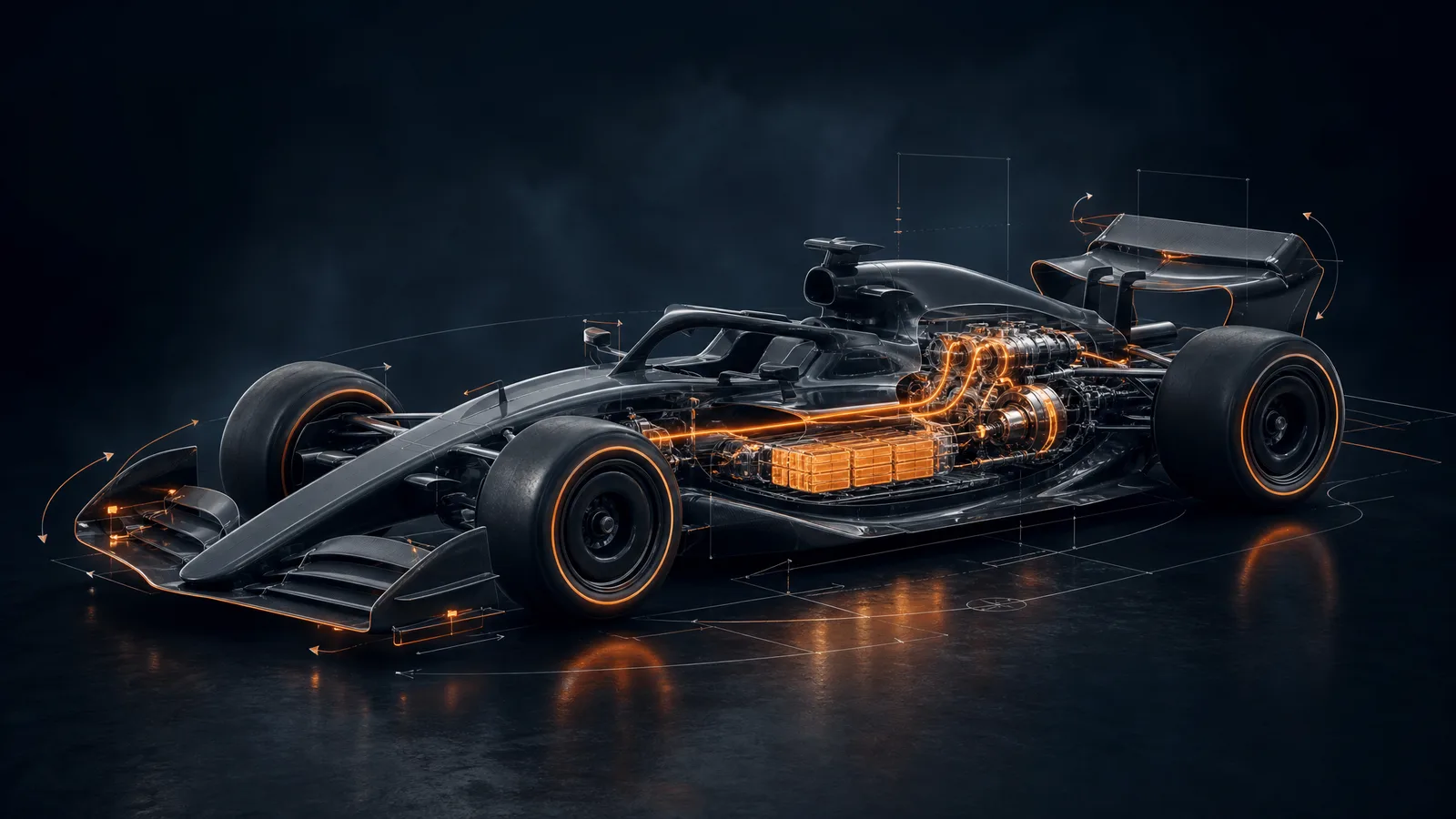
Because of the new rules on electrical power. Without Overtake Mode, the MGU-K electric motor gives its full 350 kW only up to 290 km/h; above that its output drops, reaching zero at 345 km/h. In Overtake Mode it keeps pushing up to 355 km/h. At the very highest speeds the car is driven by the internal combustion engine alone — about 400 kW, according to the FIA. The rules are covered in detail in the 2026 regulations article.
Monza is the clearest example. In qualifying the speed trap showed 355.9 km/h in 2025 and 338.1 in 2026. The best race speed fell from 364.1 to 343.9 km/h, in Baku from 359.7 to 349.4, and at Spa from 352.9 to 344.9.
In Budapest, Austria and Barcelona, on the other hand, race maximums went up by 15–28 km/h: in Budapest from 319.0 to 346.8 km/h. Throughout, we compare the best race speed in the FIA reports for 2025 and 2026.
Speed records
Williams call the first two rows records: the first is backed by an FIA report, the second is the team’s own data.
| Record | Speed | Who and where |
|---|---|---|
| Race speed, FIA measurement | 372.5 km/h | Valtteri Bottas, Mexico, 2016 |
| Speed from team data | 378 km/h | Valtteri Bottas, qualifying in Baku, 2016 |
| Average race speed | 250.706 km/h | Max Verstappen, Monza, 2025 |
| Previous average speed record | 247.585 km/h | Michael Schumacher, Monza, 2003 |
| Best speed of 2026, rounds 1–15 | 358.2 km/h | Esteban Ocon, Barcelona |
Max Verstappen won the 2025 Italian Grand Prix in 1 h 13 min 24 s — the fastest race in World Championship history. The previous record had stood since 2003: Michael Schumacher set it, also at Monza. How long races usually last is covered in a separate article.
Average race speed
Average speed is the race distance divided by the winner’s time, pit stops and safety car laps included. In 2025, 20 of the 24 races were run at average speeds between 186 and 230 km/h.
| 2025 race | Average speed |
|---|---|
| Italy, Monza | 250.7 km/h |
| Las Vegas | 229.2 km/h |
| Saudi Arabia, Jeddah | 228.2 km/h |
| Singapore | 182.5 km/h |
| Australia, Melbourne | 176.8 km/h |
| Monaco | 155.3 km/h |
In Australia, changeable weather meant part of the race was run on intermediates. Monaco was the slowest race of the season, and top speeds there are modest: 291.5 km/h in the 2025 race.
Acceleration: how quickly to 100 km/h?
There is no official figure: the FIA reports include no standing-start acceleration measurement. The regulations do show what limits it, though:
- only the rear wheels are driven;
- traction control is banned: no system may prevent wheelspin or even warn the driver about it;
- at a standing start the electric motor may only be used from 50 km/h; below that, only if the FIA electronics switch it on so that the car doesn’t accelerate too slowly;
- systems that detect the start signal are banned — the driver reacts to the lights.
So getting off the line depends largely on how well the tyres grip the asphalt and how the driver releases the clutch paddle.
Why don’t F1 cars go faster on the straights?
The wings and the floor create downforce: it lets the car take corners faster, but on the straights it also adds air resistance.
In 2026 the movable wings have two positions. In corners they are set for high downforce, and on the straights the driver switches them to Straight Mode, which cuts drag. The FIA expected the new cars to have about 55% less of it than before. Every driver may use Straight Mode in the zones the FIA marks on each circuit.
FAQ
What is the top speed of an F1 car?
372.5 km/h (231 mph) in a race on FIA timing — Valtteri Bottas, 2016 Mexican Grand Prix; Williams call it the highest official speed. At the first 15 events of 2026 the best speed was 358.2 km/h, in the race in Barcelona.
What is the F1 top speed record?
Williams call 372.5 km/h in the 2016 race in Mexico the record — the figure is in the FIA report. The team have also reported 378 km/h in qualifying in Baku in 2016, but that is their own data: the FIA speed trap there showed 366.1 km/h.
What is the average speed of an F1 car?
In a race, usually between 186 and 230 km/h: that was the case for 20 of the 24 races in 2025. The record is 250.706 km/h at Monza in 2025; the slowest race of that season was Monaco, at 155.3 km/h.
How quickly does an F1 car reach 100 km/h?
There is no official figure: the FIA reports include no such measurement. The rules limit standing-start acceleration: rear-wheel drive only, no traction control, and at the start the electric motor joins in only from 50 km/h.
Are F1 cars faster in 2026?
Not on the fastest circuits: at Monza the best race speed fell from 364.1 to 343.9 km/h, and in Baku from 359.7 to 349.4. In Budapest, Austria and Barcelona, though, it rose by 15–28 km/h.
Which F1 car is the fastest?
On straight-line speed in a race, the 2016 Williams FW38: 372.5 km/h on FIA timing, and Williams themselves call it the highest official speed. On average race speed, Max Verstappen’s Red Bull at Monza in 2025: 250.706 km/h.
How fast can cars go in the pit lane?
80 km/h, unless the Race Director sets a different limit. How speeding is penalised is explained in the pit stop article.
Sources
- FIA speed trap, 2016 Mexican Grand Prix race
- FIA Race Maximum Speeds, 2025 Italian Grand Prix
- FIA Qualifying Maximum Speeds, 2025 Italian Grand Prix
- FIA Race Maximum Speeds, 2026 Italian Grand Prix
- FIA Qualifying Maximum Speeds, 2026 Italian Grand Prix
- FIA Race Maximum Speeds, 2026 Barcelona-Catalunya Grand Prix
- FIA Race Maximum Speeds, 2025 Hungarian Grand Prix
- FIA Race Maximum Speeds, 2026 Hungarian Grand Prix
- FIA Race Maximum Speeds, 2025 Azerbaijan Grand Prix
- FIA Race Maximum Speeds, 2025 Belgian Grand Prix
- FIA Race Maximum Speeds, 2025 Austrian Grand Prix
- FIA Race Maximum Speeds, 2025 Spanish Grand Prix (Barcelona)
- FIA 2026 F1 Regulations, Section C (Technical), Art. C5.2, C8.3 and C9.1, Issue 20, 5 August 2026
- FIA: F1’s new era — everything you need to know about the 2026 rules, 17 December 2025
- Williams: how fast an F1 car can go, 19 January 2026
- Formula 1: Verstappen wins the fastest race in F1 history, 7 September 2025
- f1db, the Formula 1 results database (CC BY 4.0)