What is an F1 sprint?
A sprint is a separate short race at a sprint weekend. Its distance is the smallest number of full laps that exceeds 100 km — about a third of a normal race. The sprint takes place on the second day of the event, and the race, as always, on the third.
The sprint has its own qualifying, its own starting grid and its own points. It doesn’t affect the grid for the main race: that is set, as usual, by qualifying.
The first five sprints of 2026 lasted between 26 and 34 minutes: the quickest was at Silverstone and the longest in Shanghai. The limit is one hour: if the leader hasn’t covered the distance by then, they finish the lap in progress plus one more. A red-flag stoppage extends the limit, but to no more than an hour and a half.
How does a sprint weekend work?
There are as many sessions as at a standard event — five. But there is only one practice session, and there are two qualifying sessions.
| Day | Standard event | Sprint weekend |
|---|---|---|
| First | Two one-hour practice sessions | One-hour practice and Sprint Qualifying |
| Second | Third practice and qualifying | Sprint and qualifying for the race |
| Third | Race | Race |
Sprint Qualifying starts 2.5–3.5 hours after practice, and qualifying for the race 3–4 hours after the sprint. A shorter version is in the race weekend chapter.
Parc fermé applies twice at a sprint weekend: from the first run in Sprint Qualifying until the start of the sprint, and from the first run in qualifying until the start of the race. Between the sprint and qualifying, teams may change the car’s set-up.
What is Sprint Qualifying, and how does it work?
Sprint Qualifying works like normal qualifying, only shorter: SQ1 lasts 12 minutes, SQ2 10 and SQ3 8, with seven-minute breaks in between. The six slowest drivers are knocked out after SQ1 and again after SQ2, and in SQ3 the top ten fight for first place on the sprint grid.
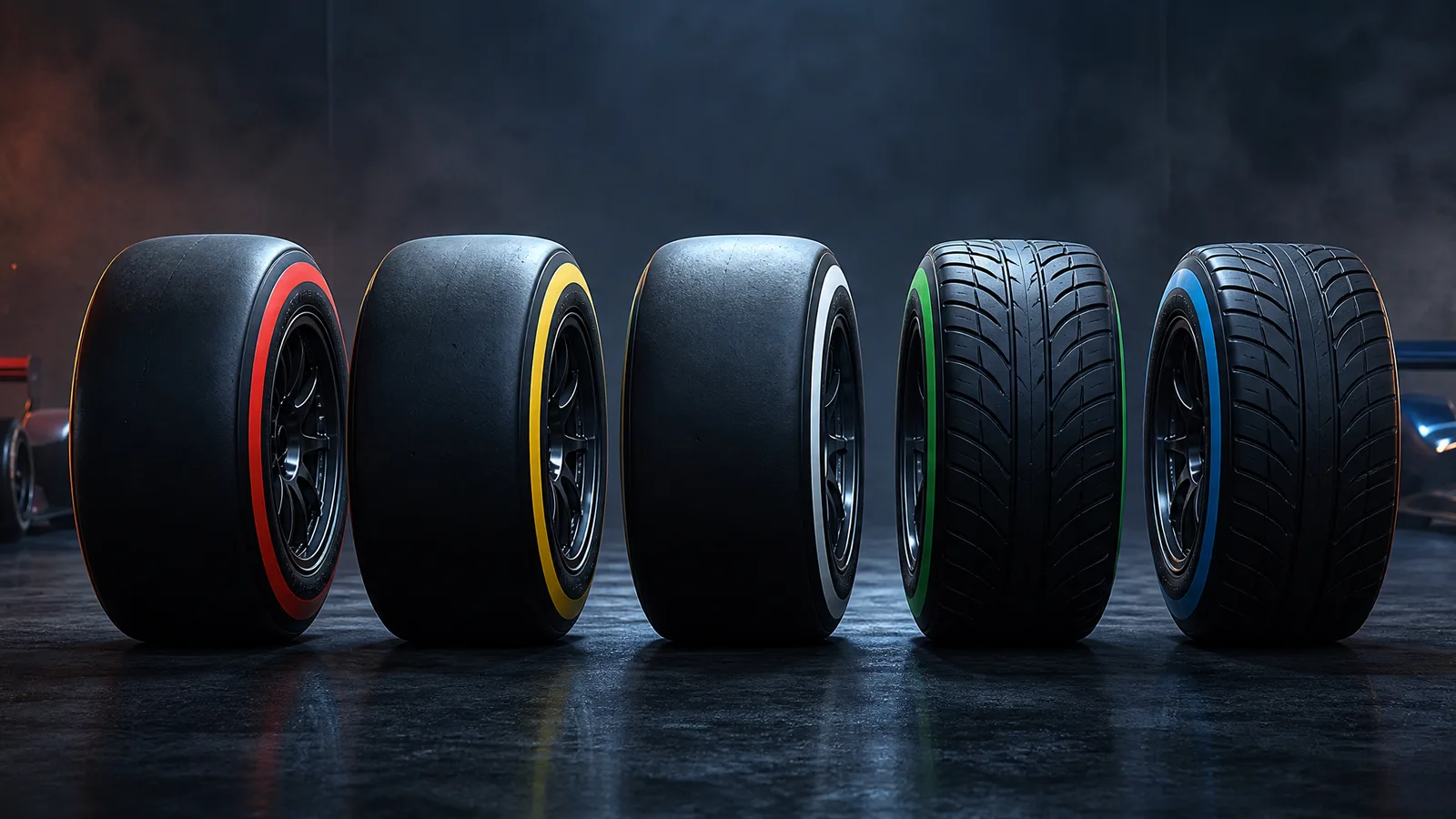
The tyres are fixed: one new set of mediums in each of SQ1 and SQ2, and a set of softs in SQ3. The 107% rule applies here too: anyone knocked out in SQ1 who is slower than 107% of the fastest time can start the sprint only if the stewards allow it. The rule isn’t applied if the track has been declared wet.
If Sprint Qualifying can’t take place and the stewards accept that, the sprint grid is set by the Drivers’ Championship standings.
How does a sprint work?
Like a normal race: a formation lap, a standing start from five red lights, and the same flags, safety car and penalties. Everyone who has covered at least 90% of the winner’s laps is classified.
The difference shows even before the start. Before the race, the pit exit is open for ten minutes for the laps to the grid, and drivers may do several. Before the sprint it is five minutes and only one lap.
There is no mandatory pit stop: the rule on two dry compounds applies only to the race. Pitting isn’t banned, but the sprint is so short that a stop for new tyres doesn’t pay off, the Formula 1 website explains. Drivers usually pit only for repairs. The rules cover rain too: a driver who used intermediates in the sprint gets an extra set for the race, if they haven’t had one already.
At a sprint weekend a driver gets 12 sets of dry tyres instead of 13: two hard, four medium and six soft. After the sprint they hand back one dry set — the one they did the most sprint laps on. The allocation for a standard event is in the tyres article.
A sprint has enough laps to add up to more than 100 km. At the first five sprints of 2026 that meant 17 laps at Silverstone, 19 in Shanghai and Miami, 23 in Montreal and 24 at Zandvoort.
How many points does a sprint pay?
In 2026 the top eight score 8, 7, 6, 5, 4, 3, 2 and 1 points, and they count towards both the Drivers’ and the Constructors’ Championship. If the leader hasn’t covered half the distance, no points are awarded at all.
In 2026 a driver can score up to 33 points on a sprint weekend: 8 in the sprint and 25 in the race. How the points system has changed over the years is covered in the points article.
Where are the 2026 sprints?
There are six sprint weekends in 2026; the dates are the days of the sprints:
- Shanghai, Chinese Grand Prix — 14 March;
- Miami — 2 May;
- Montreal, Canadian Grand Prix — 23 May;
- Silverstone, British Grand Prix — 4 July;
- Zandvoort, Dutch Grand Prix — 22 August;
- Singapore — 10 October, the last sprint of the season.
Session times in your time zone are on the Singapore Grand Prix page and in the season calendar.
In 2027 there will be ten sprints. Bahrain, Australia, Japan, Monaco and Abu Dhabi will host one for the first time, along with Canada, Silverstone, Monza, Brazil and Qatar.
How the sprint has changed since 2021
| Season | Sprints | Sprint points | Race grid set by |
|---|---|---|---|
| 2021 | 3 | 3, 2 and 1 | Sprint result |
| 2022 | 3 | 8 down to 1 | Sprint result |
| 2023 | 6 | 8 down to 1 | Qualifying on day one |
| 2024–2025 | 6 | 8 down to 1 | Qualifying after the sprint |
| 2026 | 6 on the calendar | 8 down to 1 | Qualifying after the sprint |
The first sprint was held at Silverstone in 2021 and was officially called “sprint qualifying”. Its result set the grid for the race, and the grid for the sprint itself came from normal qualifying the day before.
In 2023 the sprint was separated from the race: the race grid was now set by qualifying on day one, and the sprint got its own short qualifying, the Sprint Shootout, on day two. As Formula 1 explained, the sprint became a standalone part of the weekend. A crash in it no longer ruined a driver’s grid slot for the race, which gave drivers more reason to attack. From 2024 the order has been the same as in 2026: Sprint Qualifying on day one, the sprint and qualifying for the race on day two. In all, 29 sprints were held from 2021 to September 2026.
FAQ
What is Sprint Qualifying in F1?
A short qualifying session for the sprint on the first day of a sprint weekend: three parts of 12, 10 and 8 minutes, with six drivers knocked out after each of the first two. It doesn’t affect the grid for the main race.
How is a sprint different from a race?
A sprint is a third of the length — about 100 km instead of 305 — its time limit is one hour instead of two, and there is no mandatory pit stop. In 2026 a sprint win is worth 8 points and a race win 25.
Do drivers have to change tyres in a sprint?
There is no compulsory change: the two-dry-compounds rule is written only for the race. Pitting is allowed, but the sprint is short and a stop for fresh tyres doesn’t pay off, so drivers usually pit only for repairs.
How many laps are in a sprint?
Enough to add up to more than 100 km. At the first five sprints of 2026, from 17 at Silverstone to 24 at Zandvoort.
How many sprints are there in a season?
Six in 2026, the last on 10 October in Singapore. There are ten on the 2027 calendar.
When did the F1 sprint start?
In 2021. The first sprint was held at Silverstone; back then it was officially called “sprint qualifying” and set the grid for the race.
Sources
- FIA 2026 F1 Regulations, Section B (Sporting), Art. B2, B3.5 and B6, Issue 08, 5 August 2026
- FIA 2026 F1 Regulations, Section A, Art. A2.2, Issue 03, 25 June 2026
- FIA 2021 Formula 1 Sporting Regulations, Issue 13, 8 December 2021
- FIA 2022 Formula 1 Sporting Regulations, Issue 6, 29 April 2022
- FIA 2023 Formula 1 Sporting Regulations, Issue 8, 6 December 2023
- FIA 2024 Formula 1 Sporting Regulations, Issue 7, 31 July 2024
- FIA 2025 Formula 1 Sporting Regulations, Issue 5, 30 April 2025
- Formula 1: the 2026 Sprint calendar
- Formula 1: the sprints of 2027, 16 September 2026
- Formula 1: sprint format changes for 2023, 25 April 2023
- Formula 1: the 2024 sprint format, 14 October 2024
- Jolpica (Ergast): sprint results, 2021–2026