How qualifying works
Qualifying is three parts in a row with seven-minute breaks between them. After the first two, the slowest drivers are knocked out and take the places at the bottom of the order, and in the third the top ten fight for pole — first place on the grid.
| Part | Length | Cars | What happens |
|---|---|---|---|
| Q1 | 18 minutes | All 22 | The six slowest take 17th to 22nd |
| Q2 | 15 minutes | 16 | The six slowest take 11th to 16th |
| Q3 | 13 minutes | 10 | 1st to 10th by best lap; the fastest takes pole |
Including the breaks, qualifying takes an hour. After each part, the times of the drivers still in it are wiped, and the next part starts from scratch. If two drivers set the same time, the one who set it first is ahead.
Six drivers drop out each time because 22 cars start in 2026. With 20 cars the regulations knock out five, with 24 cars seven.
Qualifying takes place on the second day of the event: two to three hours after the third practice session at a standard weekend, and three to four hours after the sprint at a sprint weekend. There is more on the timetable in the race weekend chapter and the season calendar.
The 107% rule
A driver knocked out in Q1 must be within 107% of the fastest time in that part. Anyone slower is unclassified and starts the race only if the stewards allow it.
The maths is simple: if the fastest Q1 lap is 1:30.000, the limit is 1:36.300. The rule does not apply if the Race Director has declared the track wet.
A driver is also unclassified if they set no time in Q1 or had all their laps deleted, or if they were disqualified. The stewards decide whether such a driver may start: they can take into account practice times or results at previous events. Those allowed to race start behind everyone else.
In Sprint Qualifying the rule is the same, measured from the fastest time in SQ1.
What can ruin a lap
A qualifying lap can be deleted, and then it doesn’t count, even if it was the fastest. These are the reasons:
- the whole car went beyond the white line — the track limits were exceeded, so the lap is wiped;
- the driver went through a sector under double yellow flags — the lap time is deleted in every case, as explained in the flags article;
- the lap was completed after the red flag had been shown — it doesn’t count.
If a part is interrupted by a red flag, it is extended afterwards so that no track time is lost. But if the stoppage came when nobody could have started a flying lap anyway, that part may not be resumed.
After each part ends, drivers may cross the line only once more — enough to finish the lap they have started. A driver who stops on track and gets outside help takes no further part in that qualifying session.
Getting in the way of someone else’s flying lap is not allowed either: the usual penalty for impeding is three grid places, and if it was dangerous or deliberate, five places and three penalty points.
Tyres in qualifying
At a standard event, Q3 must be run on the softest of the three dry compounds brought to the event. Each driver keeps one set of these tyres untouched until Q3.
Sprint Qualifying is stricter: in SQ1 and SQ2 drivers may use only a new set of mediums, one per part, and in SQ3 a set of softs. The compounds and their colours are covered in the tyres chapter.
Sprint Qualifying
Sprint Qualifying sets the grid for the sprint and works the same way, only shorter: SQ1 lasts 12 minutes, SQ2 10 and SQ3 8. The grid for the race at a sprint weekend is set by normal qualifying, which follows the sprint. The timetable of such a weekend, the tyres and the rules of Sprint Qualifying are covered in the sprint article.
What is pole position?
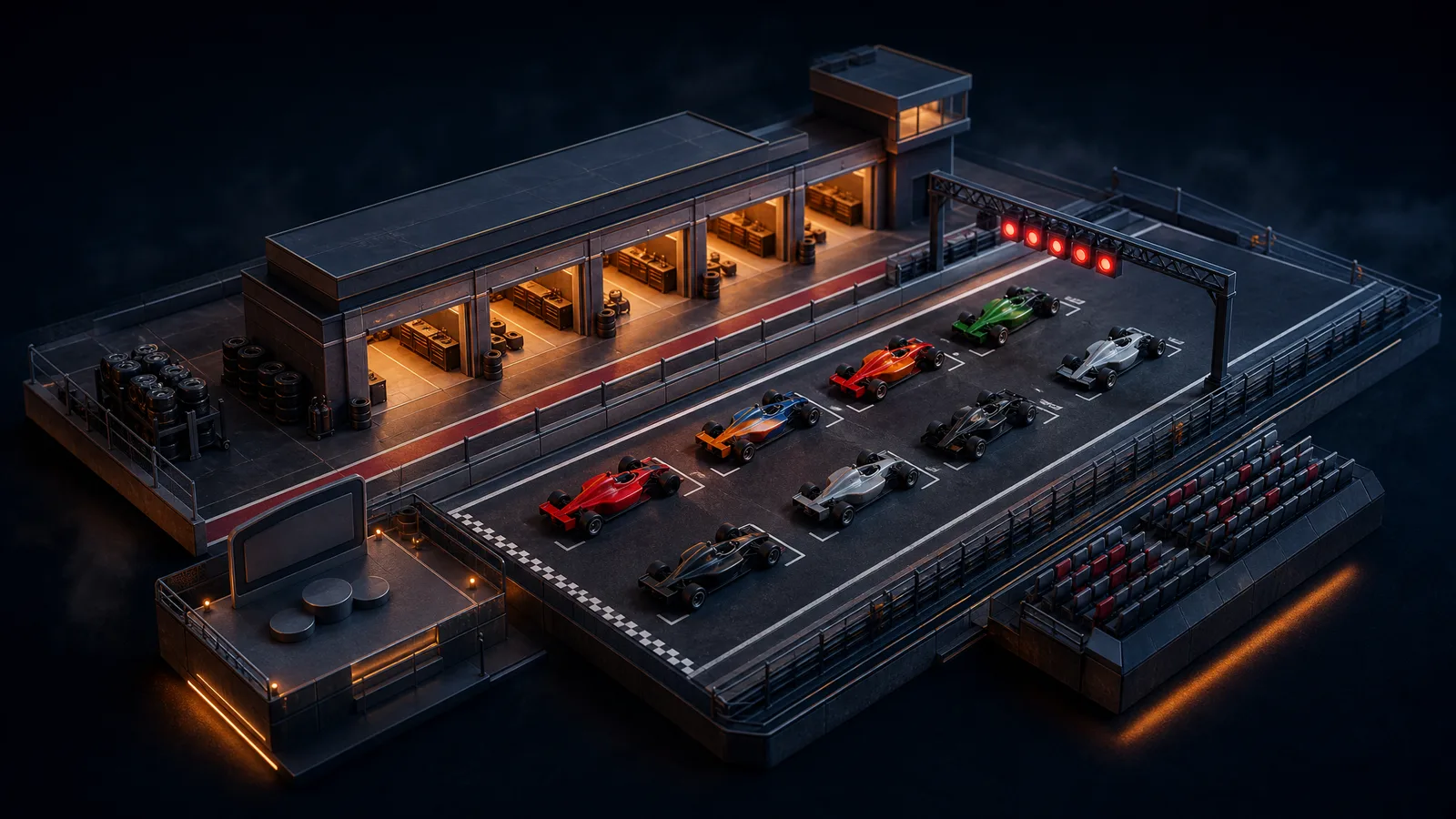
Pole position, or simply pole, is first place on the starting grid. It goes to the driver with the fastest lap in Q3; if they have a grid penalty, the next driver starts first. Cars line up on the grid in a staggered formation, with 16 metres between rows.
- Lewis Hamilton
- Michael Schumacher
- Ayrton Senna
- Sebastian Vettel
- Max Verstappen
- Jim Clark
- Alain Prost
- Nigel Mansell
- Nico Rosberg
- Juan Manuel Fangio
Polesf1db data up to 2025
How qualifying affects the race
A lot, but it doesn’t settle everything. From 1950 to 2025, 496 of 1,149 races were won from pole — 43%. That includes the 11 Indianapolis 500 races, which counted towards the World Championship from 1950 to 1960; without them the share is the same. In recent decades it has grown: from 2020 to 2025, more than half of all races were won from pole.
The winners’ starting positions tell an even clearer story. From 2000 to 2025, the winner started in the top three in 86% of races and in the top ten in 98%. Only nine times in those years did someone win from outside the top ten.
The record is a win from 22nd on the grid: John Watson won the 1983 United States Grand Prix West on the streets of Long Beach.
A qualifying position is not yet a grid position: penalties for replacing power unit parts and for breaking the rules move a driver back. Penalties add up, and anyone with more than 15 places starts behind everyone else.
FAQ
How long is F1 qualifying?
An hour: Q1 lasts 18 minutes, Q2 15 and Q3 13, plus two seven-minute breaks. Sprint Qualifying is shorter — 44 minutes.
How many drivers are knocked out in Q1 and Q2?
In 2026, six each time: 22 cars start, and ten make it to Q3. With 20 cars it would be five.
What happens if a driver misses the 107% cut-off?
They are unclassified. They can start only with the stewards’ permission — and then from the back. If the track has been declared wet, the rule does not apply.
What happens if qualifying is cancelled?
If qualifying cannot take place and the stewards accept that, the grid is set by the Drivers’ Championship standings.
Who starts ahead if two drivers set the same time?
The one who set that time first.
How is Sprint Qualifying different from normal qualifying?
It is shorter — 12, 10 and 8 minutes — and it sets the grid for the sprint, not the race. There is more in the sprint article.