Who competes, and for what
In the 2026 season Formula 1 has eleven teams, each with two cars, so 22 drivers take the start. There are two titles: the Drivers’ Championship and the Constructors’ Championship, the team standings based on the points of both drivers.
The 2026 season runs from March to December, and each event is called a Grand Prix. The line-ups are on the teams page and the schedule is in the season calendar. How teams and cars work is explained in the beginner’s chapter.
How a race weekend works
An event lasts three days. On the first day there are two one-hour practice sessions, on the second the third practice session and qualifying, and on the third the race. Practice doesn’t score points: teams use it to set up their cars and try out tyres.
Qualifying decides where everyone starts. It comes in three parts: after the first two the slowest drivers are knocked out, and in the last one the top ten fight for pole — first place on the grid. The full story is in the qualifying article.
A sprint weekend has just one practice session, followed by Sprint Qualifying. On the second day comes the sprint, a short race of just over 100 km, and then qualifying for the race. There are six such events in 2026, and how they work is explained in the race weekend chapter.
How a race works
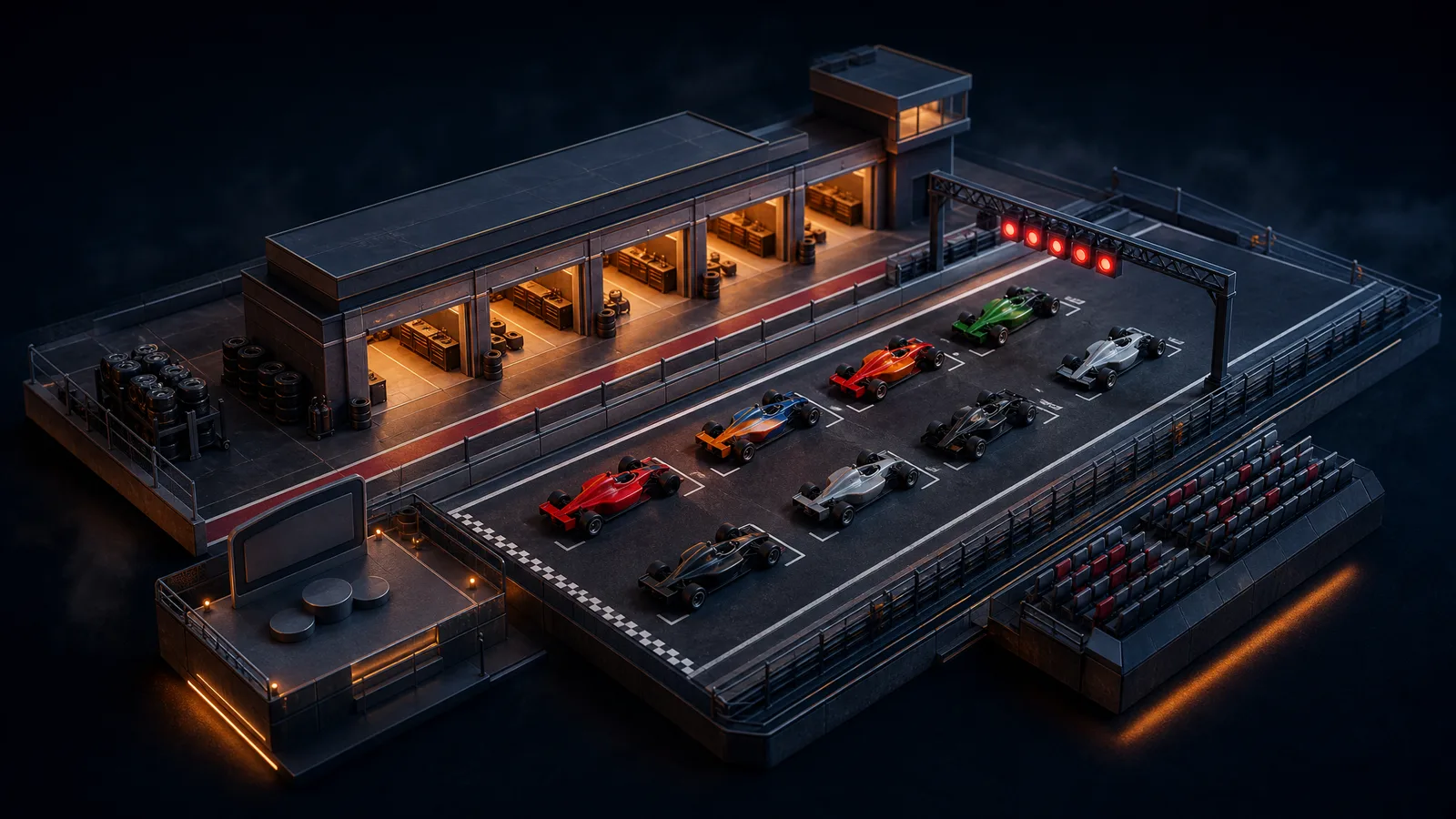
Before the start the drivers complete a formation lap and line up on the starting grid in qualifying order, adjusted for penalties. The race is started by five red lights: it begins when they go out.
The race distance is the smallest number of full laps that exceeds 305 km, or 260 km in Monaco. If the distance hasn’t been covered within two hours, the leader is shown the chequered flag at the end of the following lap. Everyone who has covered at least 90% of the winner’s laps is classified.
How points are scored
In 2026 the top ten in a race score points: 25 for the win, then 18, 15, 12, 10, 8, 6, 4, 2 and 1. In a sprint the top eight score, from 8 down to 1. There has been no point for the fastest lap since 2025.
All points count towards two championships at once: for the driver in the Drivers’ Championship and for their team in the Constructors’ Championship. If a race isn’t run to the end and the leader hasn’t covered three quarters of the distance, fewer points are awarded. The table, the tie-break rules and the history of points systems are in the points article, and a short version is in the chapter “Points and the championship”.
Tyres and pit stops
Everyone uses tyres from a single supplier. Three dry compounds are brought to each event, plus intermediates for a damp track and full wets.
- Soft
- Medium
- Hard
- Intermediate
- Full wet
In a dry race, every driver must use at least two different dry compounds, or they are disqualified. So a dry race can’t be done without a pit stop — unless it was stopped with a red flag, because tyres can also be changed during the stoppage.
When to stop and which tyres to fit is a matter of strategy. The undercut and other tricks are explained in the chapter “Tyres and pit stops”. Speed in the pit lane is limited — usually to 80 km/h (50 mph).
Flags and the safety car
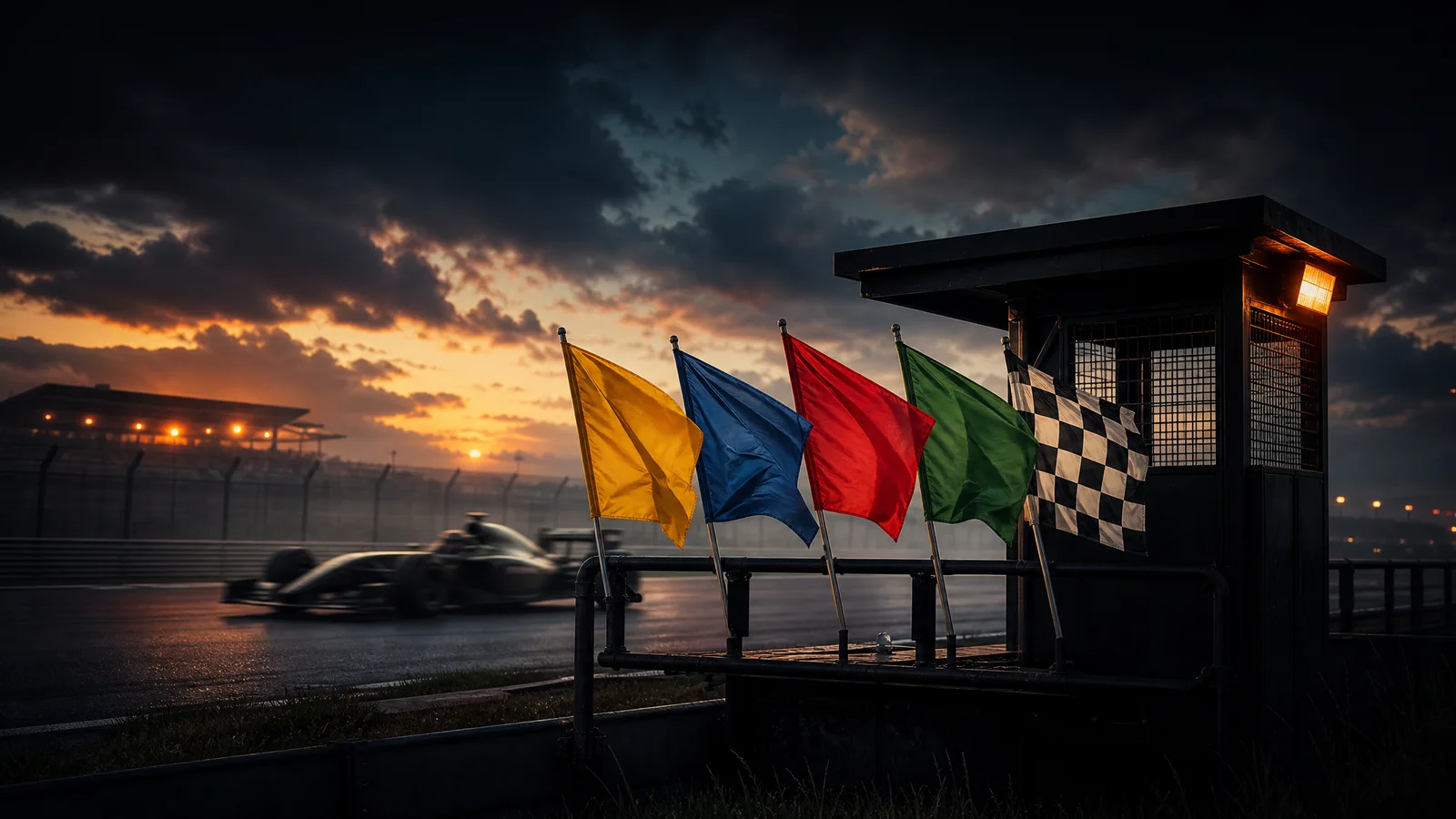
Marshals use flags to send signals to the drivers. Yellow means danger: slow down and don’t overtake. Blue: let the car about to lap you go past. Red: the session has been stopped. Chequered: the finish. All eleven signals, with pictures and penalties, are in the flags article.
If the track is dangerous — after a crash, for example — the safety car comes out: drivers follow it without overtaking. The Virtual Safety Car slows everyone down without a car on track.
Penalties
Rule breaches are judged by the stewards. In the race they hand out 5 or 10 seconds, a drive-through or a 10-second stop-and-go. For serious offences they can impose a grid penalty for the next race, disqualification and even a ban from the next event.
A 5- or 10-second penalty is served at the driver’s next pit stop. If they don’t stop again, the seconds are added to their race time.
Drivers also collect penalty points: twelve within twelve months and they miss the next event. Five reprimands in a season, at least four of them for driving, cost ten places on the grid. There is more in the chapter on flags and penalties.
What changed in 2026
In 2026 the rules were largely rewritten. Almost half the power now comes from the electric motor, the cars are smaller and lighter, DRS has been replaced by Straight Mode and Overtake Mode, and there are now eleven teams. The details, with the numbers from the regulations, are in the 2026 regulations article, and a short version is in the chapter “What changed in 2026”.
FAQ
How long is an F1 race?
As long as it takes to cover just over 305 km (just over 260 km in Monaco), but there is a two-hour limit. If the distance hasn’t been covered by then, the leader finishes the lap in progress plus one more and is shown the chequered flag. If the race was stopped with a red flag, the stoppage extends that limit, but to no more than three hours from the start. When that runs out, the leader again finishes the lap in progress plus one more. How long that usually takes and how many laps it means is covered in the race length article.
How many teams and drivers are there in F1?
In 2026 there are eleven teams, and 22 drivers take the start: each team runs two cars. Cadillac became the eleventh team.
How many points do you get for a win?
In 2026, 25 for winning a race and 8 for winning a sprint.
Why do drivers make pit stops?
To change tyres. In a dry race the rules require two different compounds, so everyone has to stop unless the race was stopped. Drivers also serve 5- and 10-second penalties at pit stops.
What is pole position?
First place on the starting grid. It goes to the driver who sets the fastest lap in the final part of qualifying, Q3.
How can I see who is leading the championship?
The 2026 Drivers’ and Constructors’ Championship standings are on the championship standings page.
Sources
- FIA 2026 F1 Regulations, Section A, Issue 03, 25 June 2026
- FIA 2026 F1 Regulations, Section B (Sporting), Issue 08, 5 August 2026
- FIA World Motor Sport Council decisions, 17 October 2024
- FIA: F1’s new era — everything you need to know about the 2026 rules, 17 December 2025
- Formula 1: the 2026 Sprint calendar
- f1db, the Formula 1 results database (CC BY 4.0)